Today I am writing the blog from very unfamiliar surroundings; the living room of my parents' new home, where I have been comfortably staying, for the last two weeks. After flying to London two Sundays ago, I have now spent half of the time that I will eventually be here for.
Re-uniting with my friends and family has been amazing, and falling back into my old life of comfortable civilisation has been a refreshing change from what I've been doing in the past eight months. Seeing my parents' new home and living with them again has been the best part of my trip back home; after all my maturing and growing up in the last year, it has been nice to be treated like a little boy again and have my mum clean up after me! After a year of army and kibbutz life, there is nothing like waking up in the afternoon and spending the whole day on the couch watching television. Although nearly every day has been filled up with something to do, this visit is also a nice relaxing rest after eight exhausting months. I have spent my time up until now doing all the things that I love; seeing friends, eating pizza and playing football (as well as watching my team Spurs qualify for the Champions League), while I've also had some more moving moments, like, when I was asked to hold the Sefer Torah in Shul for the reading of the prayer 'for the safety of the state of Israel and its defence forces', or seeing two people who greatly contributed to my aliyah journey who are now moving back to Israel.
Being back with friends has been great, but also has left me with some interesting thoughts about my current life in Israel, the life I left behind in London and life I could have led if I went to university like the rest of my mates. My friends' reaction to see me, after a full year of not seeing each other, was somewhat disappointing. They were of course excited to see me but, as per usual, my expectations were of something more and I seemed to forget that life obviously carried on without me and people moved on. I know that seems like I'm very full of myself, but I just expected something that wasn't realistic. Also, since my friends are at a number of different universities around the country, some of them hadn't seen each other for a number of months and because it is summer and everyone is back home, it was a reunion for a lot of them and not just for me. Don't get me wrong, my friends were very excited to see me and were simply in awe by the stories I had for them; stories of jumping out of an aeroplane, stories of carrying half my body weight for four days and stories of throwing grenades, flying in helicopters and running behind tanks! The boys had many typical boyish questions about what it's like having a gun and some of my friends pressed me to tell them about secrets I've learnt since being in the army, but my mouth stayed shut!!!
People had told me what it was going to be like when going home for the first time; I was warned that I would be disappointed by my expectations and how I will feel very different to the rest of my friends. Well, after being here a fortnight, I can see that things have both changed and stayed the same. After around five minutes of being with either friends or family, everything feels back to normal and like I haven't even been away, and living in North London again is pretty much exactly the same. With friends, after the initial stories and catching up, things sort of carried on like normal and the banter is exactly how it used to be (except now, any comment towards me is now related to the army!). In that sense, nothing really changes, but I can definitely notice some aspects where something is not quite how it used to be. In some ways, I have matured more than them, especially in terms of things I have to deal with on a day-to-day basis, such as, the responsibility of having a gun, trying to cope with a new language or just simply living in a foreign country without parents. As much as I try to explain the hardships of my life in Israel to my friends, whether that be the physical difficulties of the 'shetach' or the psychological difficulties of not being home (i.e. my kibbutz, Ortal) for three weeks in a row, they simply do not experience this in their relatively luxurious student lifestlyes, in comparison to mine. This is not me complaining about how hard my life is (because I love what I do and don't regret aliyah and the army for a second) or even a way to evoke sympathy, instead I am just trying to explain how my friends back here can never understand what I have been going through this year and this causes an unavoidable separation between us, which I sense is noticeable just to me. (This also makes me think that however well I describe my life to you guys, you will never truly understand how hard, or how amazingly rewarding, my journey has been. Only once you've experienced it yourself...)
This brings me to my next point about how my friends from the garin (the people who I live with on the kibbutz and who are also lone soldiers in the army) do share with me that understanding of what I'm going through because they are doing the exact same thing. Since being here in England, I've learnt to appreciate my life in Israel and the people who I am close to a lot more. This may sound obvious, but my trip back here to London has made me realise that my life is now definitely in Israel and I now feel even stronger about living in Israel permamently after the army. Although I definitely don't miss the realities of the army, I do miss my friends from the army and, in some way, I miss being a soldier and, at points, feel naked without my gun and uniform. Coming back to London is definitely just a holiday as opposed to a visit back home but this doesn't change the fact that making it just an annual visit is extrememly hard and I don't remember ever looking forward to something as much as I did for this visit, I would obviously love to be able to come back more often, but that is the cost of being in the army.
http://www.facebook.com/home.php?#!/video/video.php?v=418161533870&ref=mf
(This is a video I made for my friends in the army who are in my class. In a couple of weeks we finish our first year in the army, resulting in the partial breaking up of our company, meaning some of them may leave to other directions. So, I made this video for them; a reminder of our first year in the army together, which was most definitely a memorable, hilarious and action-packed year).
I still have another two long weeks here, which I will definitely take advantage as I have done up until now. I think being here for a full month is perfect as it gives me enough time to do all the things that I want to and I see all the people I want to see, but at the same time, by the end of the month I will be ready to go back home and restart my normal life. I will probably write another blog before I fly back to Israel. Enjoy the rest of the summer.
Saturday, 21 August 2010

Saturday, 14 August 2010
Ain't no mountain high enough...
Well I've finally reached my last blog before I make that long-anticipated trip back home! I really want to describe the insane week I had, in terms of physical difficulty, I know I seem to say this every week, but it was probably my hardest week in the army so far!!!
 Who said I wasn't famous? My collection of articles about me on my wall in my room in Ortal!!!
 Mount Hermon; beautiful, but very hard to climb!!!
This week was the 'Targad', which means a week of shetach doing exercises on a batallion level (i.e. the whole of gdud 101), basically, it was another (!) war week, my third in total. While the first two 'war weeks' have been extremely difficult, what I experienced this week was on another level. This is because while the first two were just for our company, the war week for the gdud is much harder because it involves a lot more people and it has higher status, since it is for a full IDF combat batallion (and Tzanchanim also pulls higher credibility), meaning it is constructed by high-ranking officers, like the commander of the whole Tzanchanim brigade. In short, it was a very important exercise for the army and, thus, they made the conditions as close to a real war, as possible. So, for three full days, my batallion (around 400 soldiers) walked through the Golan Heights doing all sorts of combat exercises, urban and anti-guerilla warfare etc. Since the Paratroopers are arguably the most prestigious brigade in IDF, the week was made as hard as possible, in order to test my gdud's ability to be ready for a war, meaning we had no sleep, very little food, exceedingly heavy weights on our backs and many, many kilometres to walk.
As I mentioned, Tzanchanim's reknown reputation meant that a lot of money and resources were put into this week, which made it feel like a real war (by seeing the full spectrum of the army) and also gave us 'simple' soldiers some great experiences. We started the week by going in helicopters and although it was the fourth time I've flown in a Black Hawk since being in the army, it's an experience that doesn't get old, especially when you have to try and sprint 100m towards the helicopters through the hurricane that is caused by them, while in full combat gear with the rest of your friends from the platoon. In addition to helicopters, there were also a range of weapons being used last week, some of which I never even knew about. Seeing a group of tanks moving over hills and ridges and then firing their cannons 20m from where your 'plooga' (company) is running up a hill to 'kill' an enemy, is something quite breathtaking. Due to a lack of personnel in my platoon recently, half the platoon went to a specific company and what remained were myself, three other soldiers (all of who are good friends of mine) and three commanders; my old class commander (by the way I'm on to my fourth commander already), the 'samal' and the platoon commander. I get on really well with all three of them, which meant the week was full of interesting conversations and funny moments.
 Who said I wasn't famous? My collection of articles about me on my wall in my room in Ortal!!!
We walked around 60km in total during the three days of 'war', which is massive when you think of the type of weights we were carrying on our backs. Walking with weight on your back is definitely something that has been drilled into me since I joined the army and this is an intended by the army, after the relatively disastrous Second Lebanon War in 2006, where post-reports showed the soldiers were uncapable of carrying the heavy weights and, in fact, weren't even carrying enough as they lacked extra food and ammunition. Consequently, the army now spends a lot of time trying to train us combat soldiers how to deal with walking for long periods while carrying heavy bags on our backs. Rather than feeling more muscular in the arms or a faster runner, being capable of carrying is what I've gained since being in the army and I assure you that most soldiers in the IDF will agree to that. This little side-point about carrying weight is relevant to the next thing I'm going to speak about: that hardest point of the whole week, something that even compares to the masa kumta in terms of difficulty! As the final exercise of war week, my gdud was subject to climb the Hermon (!), in order to 'kill the terrorsits there'. When us soldiers heard about this final challenge for the week, a lot of people cursed the army, seeing it as an unecessary exercise, as per usual I saw it as one of those incredible experiences that I've been through since being in the army. However, I wasn't thinking like that for long.
Mount Hermon is 2,814m (9,232ft) high at its peak, and, of course, we were told to reach the peak! The 'aliyah' (ascent) of the Hermon took 13 hours and this was after 3 days of 'war'!!! It was simply one of those crazy hard challenges, so hard that there were some people who had to stop because of dehydration or blackouts. They told us "don't look down" because of the height, but I though "don't look up", to see what was left to climb. was more appropriate. The Hermon, Israel's biggest mountain, is gigantic and it's like a visual allusion, because you see this mountain, you reach the top of it and then you see that there's something else to climb that's even bigger. Climbing the Hermon wasn't a random torturous exercise, in fact, the Hermon has important significance in terms of military and strategic history, and climbing it to capture the peak is something that IDF soldiers have achieved in the past. It was a very hard night/morning but in the end, very worthwhile and one of those experiences I'll never forget, especially since I carried the MAG (the 15kg machine) for the last 5km, since our MAGist blacked out from exhaustion!
It is true that pictures say a thousand words and I'm annoyed that I wasn't able to use my camera this week as I saw some truly memorable sights. Whether it was the view at the peak of the Hermon where we were above the clouds, or the silouhette of the whole gdud walking through the Golan Heights at dusk or even the shocked faces of a bus full of Muslim clerics who we passed while in military formation!!!
 Mount Hermon; beautiful, but very hard to climb!!!
That's it! I'm now sitting in my room in Ortal with my suitcase packed, ready to go home and visit my family and friends for a whole month. I'm so excited just to live in civilisation again and do all the things I've missed doing, like eating at Pizza Express, or going to the cinema, or going to watch Spurs with my papa (I'll hopefully be going to the game where we qualify for the Champions League)!! I will try at some point to write a blog from London, my last blog from England was on the night I made aliyah, so it will be very fitting. Wish me a safe flight....
Thursday, 12 August 2010
Sweat in the Tsvach
I've just had the most physically difficult two weeks in the army; jam-packed with memorable stories and frightening moments, all of which I'll talk about in these next two blogs. I never thought I would make it to this moment (not just because of the last fortnight but, also in general), I am currently in my kibbutz for my final weekend before flying back home for a month, there are simply no words to describe my excitement to go back home for a month!
Firstly, however, I want to tell you all about these crazy couple of weeks I've had, where I finally understood and realised that all those hard weeks of shetach on the training base are nothing compared to the shetach training in the gdud (battalion). Last week, I had 'imon tsvach', which is basically the training for guerilla and anti-guerilla warfare. There are many things from this week that I can't really talk about on this public blog, but I can talk about some stuff, which will hopefully explain why last week was so hard. For around four days my gdud, battalion 101 of the tzanchanim brigade, trained in the 'tsvach' and we learnt all about anti-guerilla warfare; this extends my repetoire as a soldier, having mastered both rural and urban warfare (wow, I never thought I would end up talking like some sort of military general but this is what I do as day-to-day life). We learnt how to move and conquer enemies in 'shetach' (terrain) that is very difficult; tall trees, wide bushes, thorns on every corner and all in a tight, compact space. To get us warmed up, our commanders gave us 'aggressive training', where we were made to run through thorn bushes! This actually turned out to be one of those hilarious moments, where seeing each other tangled up in trees and bushes seemed to block out the pain of thousands of thorns pressing into our bodies. Of course, the 'mefakdim' (commanders) were in hysterics themselves!
 This is the
'tsvach'. Imagine running through that big bush in the foreground... that's what I did all last week!
On a more serious note, we learnt a lot about the practicalities of anti-guerilla warfare and, therefore, about the terrorist group Hizbullah. Hizbullah are probably Israel's most dangerous active enemy, due to their style of fighting and expert knowledge of their terrain (guerilla), organised army (there are even elite units) and their arsenal of weapons (including some scary types of rockets). As a result, we learnt about the IDF's response to this serious danger i.e. our ways of how to defeat these terrorists and combat tactics in the tsvach. This is obviously the more confidential part of last week, but was incredibly interesting and the exercises themsleves, despite being tiring, were very enjoyable. For most of the week, it felt very much like we were in Vietnam; walking slowly through forested areas and carefully listening to every movement and sound. Why it really felt like Vietnam, however, was the unbearbale heat. I simply can't explain how hot it was in the 'tsvach' (Israel's hottest week of the year) and I didn't think my body was capable of releasing so much sweat, at one point our eyes were stinging so much from the salt of the sweat pouring off our foreheads that we had to stop momentarily. All in all, it was an exhausting couple of days but very rewarding in terms of knowledge and exercises.
 This was me last week in the 'tsvach'. Try and ignore the terrible haircut and notice the colour of my shirt. The dark green indicates the ridiculous amount of sweat!!!
Halfway through 'tsvach' week, we heard news of an attack on the Israeli border with Lebanon. As we all know now, luckily it was just a one-time thing that seems to have been a mistake, however, news like that travels fast and, like in all Jewish communities, news is exaggerated, and Israel is no different. We got the news that there had been some sort of attack on our northern border and that war with Hizbullah was imminent; remember, at the time we were learning about anti-guerilla warfare and how to combat in the 'tsvach' of Southern Lebanon. What we were doing suddenly went from standard combat training to last-minute preparations before war, and to be honest I was a little bit scared. I wasn't scared of the enemy or scared of getting hurt, instead, I felt very unprepared psychologically. Coming into the army, the dangers of terrorism and war are obvious, but I've never felt like I am going to be involved in something like that. However, after that incident (that was thankfully just a scare), I feel more ready mentally that if something were to happen in the future that I need to step up to the plate and do what, as an IDF combat soldier, I've been trained to do. I know that sounds like some sort of line from an action movie, but in all seriousness, as my 'samal' said "if something were to happen, we (the current soldiers in the army) have the responsibility to deal with it; as it is simply our time". I understand more, now, the importance of being a 'lohem' (fighter) and the responsibility that comes with that role.
עד עכשיו, אף פעם לא כתבתי בעברית אבל חשבתי שהזמן הגיע. לכל מי שמבין רציתי להיראות לכם איך העברית שלי השתפרה בזמן שעליתי לארץ. הרוב זה מהצבא כי שם אני רק מדבר עם החברים והמפקדים בעברית ופשות אין עוד דרך להסביר את אצמי. יותר נוח לי עכשיו לדבר בעברית במקום ציבורי, או שזה לנהג באוטובוס או למלצר במסעדה. אם הבנתם אז אני מקווה שלא עשיתי כל כך הרבה שגיעות!!!!! י
(if you didn't get any of that, I was just trying to show off my improved Hebrew!!!!).

Being back on base this weekend didn't change the heat. On Shabbat, practically the whole
'plooga' (company) decided to sleep in the common room becuase of the air conditioning!
That was just last week; I will write another blog tomorrow about this week, which was even harder physically and more challenging mentally...
Firstly, however, I want to tell you all about these crazy couple of weeks I've had, where I finally understood and realised that all those hard weeks of shetach on the training base are nothing compared to the shetach training in the gdud (battalion). Last week, I had 'imon tsvach', which is basically the training for guerilla and anti-guerilla warfare. There are many things from this week that I can't really talk about on this public blog, but I can talk about some stuff, which will hopefully explain why last week was so hard. For around four days my gdud, battalion 101 of the tzanchanim brigade, trained in the 'tsvach' and we learnt all about anti-guerilla warfare; this extends my repetoire as a soldier, having mastered both rural and urban warfare (wow, I never thought I would end up talking like some sort of military general but this is what I do as day-to-day life). We learnt how to move and conquer enemies in 'shetach' (terrain) that is very difficult; tall trees, wide bushes, thorns on every corner and all in a tight, compact space. To get us warmed up, our commanders gave us 'aggressive training', where we were made to run through thorn bushes! This actually turned out to be one of those hilarious moments, where seeing each other tangled up in trees and bushes seemed to block out the pain of thousands of thorns pressing into our bodies. Of course, the 'mefakdim' (commanders) were in hysterics themselves!
 This is the
'tsvach'. Imagine running through that big bush in the foreground... that's what I did all last week!
On a more serious note, we learnt a lot about the practicalities of anti-guerilla warfare and, therefore, about the terrorist group Hizbullah. Hizbullah are probably Israel's most dangerous active enemy, due to their style of fighting and expert knowledge of their terrain (guerilla), organised army (there are even elite units) and their arsenal of weapons (including some scary types of rockets). As a result, we learnt about the IDF's response to this serious danger i.e. our ways of how to defeat these terrorists and combat tactics in the tsvach. This is obviously the more confidential part of last week, but was incredibly interesting and the exercises themsleves, despite being tiring, were very enjoyable. For most of the week, it felt very much like we were in Vietnam; walking slowly through forested areas and carefully listening to every movement and sound. Why it really felt like Vietnam, however, was the unbearbale heat. I simply can't explain how hot it was in the 'tsvach' (Israel's hottest week of the year) and I didn't think my body was capable of releasing so much sweat, at one point our eyes were stinging so much from the salt of the sweat pouring off our foreheads that we had to stop momentarily. All in all, it was an exhausting couple of days but very rewarding in terms of knowledge and exercises.
 This was me last week in the 'tsvach'. Try and ignore the terrible haircut and notice the colour of my shirt. The dark green indicates the ridiculous amount of sweat!!!
Halfway through 'tsvach' week, we heard news of an attack on the Israeli border with Lebanon. As we all know now, luckily it was just a one-time thing that seems to have been a mistake, however, news like that travels fast and, like in all Jewish communities, news is exaggerated, and Israel is no different. We got the news that there had been some sort of attack on our northern border and that war with Hizbullah was imminent; remember, at the time we were learning about anti-guerilla warfare and how to combat in the 'tsvach' of Southern Lebanon. What we were doing suddenly went from standard combat training to last-minute preparations before war, and to be honest I was a little bit scared. I wasn't scared of the enemy or scared of getting hurt, instead, I felt very unprepared psychologically. Coming into the army, the dangers of terrorism and war are obvious, but I've never felt like I am going to be involved in something like that. However, after that incident (that was thankfully just a scare), I feel more ready mentally that if something were to happen in the future that I need to step up to the plate and do what, as an IDF combat soldier, I've been trained to do. I know that sounds like some sort of line from an action movie, but in all seriousness, as my 'samal' said "if something were to happen, we (the current soldiers in the army) have the responsibility to deal with it; as it is simply our time". I understand more, now, the importance of being a 'lohem' (fighter) and the responsibility that comes with that role.
עד עכשיו, אף פעם לא כתבתי בעברית אבל חשבתי שהזמן הגיע. לכל מי שמבין רציתי להיראות לכם איך העברית שלי השתפרה בזמן שעליתי לארץ. הרוב זה מהצבא כי שם אני רק מדבר עם החברים והמפקדים בעברית ופשות אין עוד דרך להסביר את אצמי. יותר נוח לי עכשיו לדבר בעברית במקום ציבורי, או שזה לנהג באוטובוס או למלצר במסעדה. אם הבנתם אז אני מקווה שלא עשיתי כל כך הרבה שגיעות!!!!! י
(if you didn't get any of that, I was just trying to show off my improved Hebrew!!!!).

Being back on base this weekend didn't change the heat. On Shabbat, practically the whole
'plooga' (company) decided to sleep in the common room becuase of the air conditioning!
That was just last week; I will write another blog tomorrow about this week, which was even harder physically and more challenging mentally...
Saturday, 31 July 2010
A year on...
I can hardly believe what I am about to write here... This Thursday, the 5th of August 2010, will be the first anniversary of the day I made aliyah. A year has passed since I packed up my bags, said goodbye to all my loved ones and emigrated to Israel, as part of my aliyah journey. What a year it has been...
A year ago I followed my dreams and made aliyah; arriving to kibbutz Ortal with a garin of young zionists from all over the world. For three and a half months, we bonded together as a group, travelled the country, learned hebrew in ulpan and went through some early army processes, like Gadna and Tsav Rishon. Then in November, we all enlisted into the army, each one going to a different place. For me, after passing the gibush, I joined the legendary Israeli Paratroopers' brigade and started basic training in early December. My time in the army has been significant to say the least; from the swearing-in ceremony at the Kotel and jumping out of a plane five times, to war week and the gruelling masa kumta. The climax of everything, however, was when my parents surprised me at my tekes kumta and were there to see me get my red beret. Since that memorable day I have joined up with the rest of my battalion and am currently doing training in the North under the title of 'Rabat' (corporal!!!). That is basically is a quick sum up of my year, but luckily I can always look back at a more detailed version, thanks to the blog...

Nine months of hard work in the army and this is what I have to show for it - the tzanchanim shoulder tag, the wings and, of course, the red beret!!!
Before leaving London, I decided to write a blog, in order to keep both family and friends updated with my doings, but also as a little project for myself. As the year has gone on, however, I have been delighted to see that other people, from all over the world, have been reading this and from some of your warm comments, it is clear to me that my story has really inspired and interested some people. Although my original aims for the blog still remain (I still enjoy the blog as a personal project where I can look back on what I've done), I do feel like now I have different expectations and reasons for doing this. Now, I want to show people what it is like to be a lone soldier and a new immigrant in a foreign country; both the highs and the lows. I also want to show people an understanding to the IDF and the life of a combat soldier. However, the greatest thing I get out of this blog is the inspiration it gives to people who start to consider or actually go out and make aliyah themselves. As a fervent zionist myself (making aliyah and being in the army has only strengthened my, already, strong ideologies) to help encourage young guys to make aliyah is the most rewarding gift of all. Now I'm not saying how I want everyone who reads this blog to go and move to Israel because I respect the fact that it is an incredibly tough decision and harder reality, but for me personally, I think aliyah is a priveledge we have in our lifetime that was virtually unthinkable for the previous 2000 years until as little as 65 years ago, thus, is something all Jews should be taking advantage of.
In just two weeks I am going back home for a month, which is my entitled holiday that a lone soldier can use once a year to fly back home. As you can tell, I have had a fantastic year, not only have I enjoyed my army service but I am always excited to go back to my kibbutz on free weekends to meet up with friends from the garin, who are still very much my family here in Israel. Despite being very happy and never regretting my decision for a minute, I have been waiting come home for a while and since it was confirmed by the army, I've been extremely excited ever since (in fact, thinking about coming home was a regular way to pass the time during masaot). Rememeber I haven't been back to England in a year and have not seen any of my friends and most of my family in that time. Not only that, but I will also be going back to a new house, after my parents moved from the home that I lived in for my whole life. To be honest, I am also just excited to be going back to some sort of familiarity; I have already written down lists of people I need to see, things I need to do and foods I need to eat. I really can't describe in words how excited I am to go home and have a month's long holiday of relaxation, catching up, being with loved ones and just having fun.
 My beloved garin, a year on.
Some people have asked me if I've changed in a year and I don't really know the answer. On one hand, I haven't changed as I am still that little jewish mummy's boy from North London. I still get upset by the little things, I still cry when I miss my parents and I still get scared of getting in trouble. In my head, I feel like the same person with the same thoughts but there is definitely some sort of clear change. In terms of experience, how can I compare myself to any of my friends, which of them have guarded at a crosspoint between a Jewish and a Palestinian street in Hebron or jumped from a plane at night with a bag strapped to their leg containing their combat vest. I have also become much more responsible and independant, especially when you think that I travel the country on my own every week to get to base and how I have signed on and am now responsible for a gun. I left my parents at the age of 18 to another country, learnt a new language and, now, am a ready-for-war combat soldier in active army that is constantly fighting terrorists. How can doing that not change someone??? In the end, though, I would say that it is amazing how after going through all these experiences, having all these responsibilites and dealing with all these worries, I am still the same Sam Sank. I suspect when I go home that after five minutes it will feel like nothing has changed and that's how I want it to be. After all I've been through this year, I can still be the same person I've always been and I'm kind of proud of that.
 Is that the ready-for-war combat soldier I was talking about?!?!?
This Thursday I am going to the opening ceremony for this year's Garin Tzabar, the programme that I used to make aliyah. It is surreal to think how I will be greeting people and giving advice to those at the start of their aliyah and army journey, as one who has "been through it all" already. I also want to say how a year on, the garin is still as important for me as it was the first day I made aliyah and how this programme really is the best way for young people to make aliyah and join the army. In a way, this year has been so fast and yet so slow, but it has been and now I need to look forward to the year ahead. Thanks to all who have read and enjoyed the blog so far (and continue to comment as I really appreciate the feedback) and I hope you will continue reading. I will try and write one more blog on the eve of my trip in two weeks...
A year ago I followed my dreams and made aliyah; arriving to kibbutz Ortal with a garin of young zionists from all over the world. For three and a half months, we bonded together as a group, travelled the country, learned hebrew in ulpan and went through some early army processes, like Gadna and Tsav Rishon. Then in November, we all enlisted into the army, each one going to a different place. For me, after passing the gibush, I joined the legendary Israeli Paratroopers' brigade and started basic training in early December. My time in the army has been significant to say the least; from the swearing-in ceremony at the Kotel and jumping out of a plane five times, to war week and the gruelling masa kumta. The climax of everything, however, was when my parents surprised me at my tekes kumta and were there to see me get my red beret. Since that memorable day I have joined up with the rest of my battalion and am currently doing training in the North under the title of 'Rabat' (corporal!!!). That is basically is a quick sum up of my year, but luckily I can always look back at a more detailed version, thanks to the blog...

Nine months of hard work in the army and this is what I have to show for it - the tzanchanim shoulder tag, the wings and, of course, the red beret!!!
Before leaving London, I decided to write a blog, in order to keep both family and friends updated with my doings, but also as a little project for myself. As the year has gone on, however, I have been delighted to see that other people, from all over the world, have been reading this and from some of your warm comments, it is clear to me that my story has really inspired and interested some people. Although my original aims for the blog still remain (I still enjoy the blog as a personal project where I can look back on what I've done), I do feel like now I have different expectations and reasons for doing this. Now, I want to show people what it is like to be a lone soldier and a new immigrant in a foreign country; both the highs and the lows. I also want to show people an understanding to the IDF and the life of a combat soldier. However, the greatest thing I get out of this blog is the inspiration it gives to people who start to consider or actually go out and make aliyah themselves. As a fervent zionist myself (making aliyah and being in the army has only strengthened my, already, strong ideologies) to help encourage young guys to make aliyah is the most rewarding gift of all. Now I'm not saying how I want everyone who reads this blog to go and move to Israel because I respect the fact that it is an incredibly tough decision and harder reality, but for me personally, I think aliyah is a priveledge we have in our lifetime that was virtually unthinkable for the previous 2000 years until as little as 65 years ago, thus, is something all Jews should be taking advantage of.
In just two weeks I am going back home for a month, which is my entitled holiday that a lone soldier can use once a year to fly back home. As you can tell, I have had a fantastic year, not only have I enjoyed my army service but I am always excited to go back to my kibbutz on free weekends to meet up with friends from the garin, who are still very much my family here in Israel. Despite being very happy and never regretting my decision for a minute, I have been waiting come home for a while and since it was confirmed by the army, I've been extremely excited ever since (in fact, thinking about coming home was a regular way to pass the time during masaot). Rememeber I haven't been back to England in a year and have not seen any of my friends and most of my family in that time. Not only that, but I will also be going back to a new house, after my parents moved from the home that I lived in for my whole life. To be honest, I am also just excited to be going back to some sort of familiarity; I have already written down lists of people I need to see, things I need to do and foods I need to eat. I really can't describe in words how excited I am to go home and have a month's long holiday of relaxation, catching up, being with loved ones and just having fun.
 My beloved garin, a year on.
Some people have asked me if I've changed in a year and I don't really know the answer. On one hand, I haven't changed as I am still that little jewish mummy's boy from North London. I still get upset by the little things, I still cry when I miss my parents and I still get scared of getting in trouble. In my head, I feel like the same person with the same thoughts but there is definitely some sort of clear change. In terms of experience, how can I compare myself to any of my friends, which of them have guarded at a crosspoint between a Jewish and a Palestinian street in Hebron or jumped from a plane at night with a bag strapped to their leg containing their combat vest. I have also become much more responsible and independant, especially when you think that I travel the country on my own every week to get to base and how I have signed on and am now responsible for a gun. I left my parents at the age of 18 to another country, learnt a new language and, now, am a ready-for-war combat soldier in active army that is constantly fighting terrorists. How can doing that not change someone??? In the end, though, I would say that it is amazing how after going through all these experiences, having all these responsibilites and dealing with all these worries, I am still the same Sam Sank. I suspect when I go home that after five minutes it will feel like nothing has changed and that's how I want it to be. After all I've been through this year, I can still be the same person I've always been and I'm kind of proud of that.
 Is that the ready-for-war combat soldier I was talking about?!?!?
This Thursday I am going to the opening ceremony for this year's Garin Tzabar, the programme that I used to make aliyah. It is surreal to think how I will be greeting people and giving advice to those at the start of their aliyah and army journey, as one who has "been through it all" already. I also want to say how a year on, the garin is still as important for me as it was the first day I made aliyah and how this programme really is the best way for young people to make aliyah and join the army. In a way, this year has been so fast and yet so slow, but it has been and now I need to look forward to the year ahead. Thanks to all who have read and enjoyed the blog so far (and continue to comment as I really appreciate the feedback) and I hope you will continue reading. I will try and write one more blog on the eve of my trip in two weeks...
Friday, 30 July 2010
Life in the Gdud
It's good to be back in Ortal after a fairly hard week and a half in the army, which was the first time I've actually done something in about a month!! This is because since my masa kumta, I spent a long weekend with my parents in Tel Aviv, had two weeks of ulpan at the old base, which included sleep-ins and hamshooshim, and finally, when I finally reached the 'gdud' (battalion) a couple of weeks ago, I was sent straight back home for my regila (a week holiday that a kravi soldier recieves around twice a year).
I didn't do anything particularly interesting during my regila, as opposed to most Israelis, who normally travel down to Eilat for a week. Instead, during my three-day holiday, I stayed on the kibbutz and watched a lot of movies. One significant thing I did do was travelling down to Tel Aviv and getting my plane ticket to London (only two weeks to go!), which the army is paying for - this is a lone soldier right, where we are entitled to one free plane ticket home during our army service. The time came, however, for me to go back to the army and get back into the swing of things, and I have been on my new base with my gdud 101, for the last fortnight. I did manage to get out 'hamshoosh' (Thursday weekend) yesterday, which was the 14th hamshoosh of my service and is certainly some sort of record in terms of how much hamsooshim a kravi soldier can get in one year!


The difference between the previous and current base: 'plooga' (company) area.
In short, being in the gdud at the moment absolutely sucks. There are a lot of reasons for this; firstly, the base is a complete dump and the transition from being at one of the best bases in Israel to makeshift tents and showers is a bit of shock. From having 8 showers for a platoon (around 25 people) to now having 4 showers for the whole company (around 80 people). This is kind of problematic, especially when everyone goes to shower at the same time after P.E. This base is 15 minutes away from my kibbutz in the Golan Heights, which is absolutely fantastic as it means I can wake up late on Sundays and get home earlky on Fridays, however, the conditions are pretty bad and, for these past weeks, it has been like a sauna there. In addition to this, my company is now the newest and youngest of the four companies in the 101 battalion and, in tradition to army culture, we get treated the worst. Since we are 'tzairim' (young ones), we are given all the guard, kitchen and cleaning duty round the base, and are whistled and cursed by all the 'vatikim' (old ones) of the gdud. It's not such a gdud life!


The difference between the previous and current base: my room/tent!
My battalion's time in the Golan is part of its summer training, which will last for the next two months, before we move on to 'kav' (literally translates as line), which is the general guarding of Israel's borders. This training involves all sorts of activities in the shetach, at both company and batallion level, and even one giant exercise, which will involve the whole Tzanchanim brigade. As part of this training, this week was 'Shavua Milhama' (war week), meaning shetach and combat exercises at a company level. Yes, that's right, despite having our first war week just over a month ago on base, we were now subject to another one. To be honest it wasn't so bad this time, it was only a couple of days and the atmosphere was much more relaxed with all the commanders. I did, however, carry a ridiculous amount of weight though, not only was my bag filled with water bottles and all my perosnal equipment, but I also was left to carry extra ammunition for the 'negev' (a light machine gun). Despite all my complaining in this blog, being in the gdud does have some benefits and the most notable one is the change of attitude around the company. A lot of rules that were related to basic training have now been dropped (e.g. we are now allowed to walk around the company area with t-shirts instead of standard army shirts) and the distance between soldier and commander is all but non-existent. This makes things more fun and I am really enjoying getting to know my more senior commanders as human beings and friends, rather than taskmasters.

The difference between the previous and current base: the showers.
Next week I have 'imon svach' (training in bush-like terrain) and I will be closing next Shabbat, as well. The following week is shetach with battalion-wide exercises and then that weekend will be my last in Israel before I fly home for a month that Sunday. I am going to write another blog tomorrow about my upcoming one year anniversary of being in Israel (!!!!!!!!!!!!!!!) so stay tuned and carry on reading (and commenting) my blog in general, I really do hope it brings inspiration to people and some sort of insight to the aliyah experience and to the life of a lone soldier in a combat unit of the Israeli Defence Forces. Thanks for reading so far....
I didn't do anything particularly interesting during my regila, as opposed to most Israelis, who normally travel down to Eilat for a week. Instead, during my three-day holiday, I stayed on the kibbutz and watched a lot of movies. One significant thing I did do was travelling down to Tel Aviv and getting my plane ticket to London (only two weeks to go!), which the army is paying for - this is a lone soldier right, where we are entitled to one free plane ticket home during our army service. The time came, however, for me to go back to the army and get back into the swing of things, and I have been on my new base with my gdud 101, for the last fortnight. I did manage to get out 'hamshoosh' (Thursday weekend) yesterday, which was the 14th hamshoosh of my service and is certainly some sort of record in terms of how much hamsooshim a kravi soldier can get in one year!


The difference between the previous and current base: 'plooga' (company) area.
In short, being in the gdud at the moment absolutely sucks. There are a lot of reasons for this; firstly, the base is a complete dump and the transition from being at one of the best bases in Israel to makeshift tents and showers is a bit of shock. From having 8 showers for a platoon (around 25 people) to now having 4 showers for the whole company (around 80 people). This is kind of problematic, especially when everyone goes to shower at the same time after P.E. This base is 15 minutes away from my kibbutz in the Golan Heights, which is absolutely fantastic as it means I can wake up late on Sundays and get home earlky on Fridays, however, the conditions are pretty bad and, for these past weeks, it has been like a sauna there. In addition to this, my company is now the newest and youngest of the four companies in the 101 battalion and, in tradition to army culture, we get treated the worst. Since we are 'tzairim' (young ones), we are given all the guard, kitchen and cleaning duty round the base, and are whistled and cursed by all the 'vatikim' (old ones) of the gdud. It's not such a gdud life!


The difference between the previous and current base: my room/tent!
My battalion's time in the Golan is part of its summer training, which will last for the next two months, before we move on to 'kav' (literally translates as line), which is the general guarding of Israel's borders. This training involves all sorts of activities in the shetach, at both company and batallion level, and even one giant exercise, which will involve the whole Tzanchanim brigade. As part of this training, this week was 'Shavua Milhama' (war week), meaning shetach and combat exercises at a company level. Yes, that's right, despite having our first war week just over a month ago on base, we were now subject to another one. To be honest it wasn't so bad this time, it was only a couple of days and the atmosphere was much more relaxed with all the commanders. I did, however, carry a ridiculous amount of weight though, not only was my bag filled with water bottles and all my perosnal equipment, but I also was left to carry extra ammunition for the 'negev' (a light machine gun). Despite all my complaining in this blog, being in the gdud does have some benefits and the most notable one is the change of attitude around the company. A lot of rules that were related to basic training have now been dropped (e.g. we are now allowed to walk around the company area with t-shirts instead of standard army shirts) and the distance between soldier and commander is all but non-existent. This makes things more fun and I am really enjoying getting to know my more senior commanders as human beings and friends, rather than taskmasters.

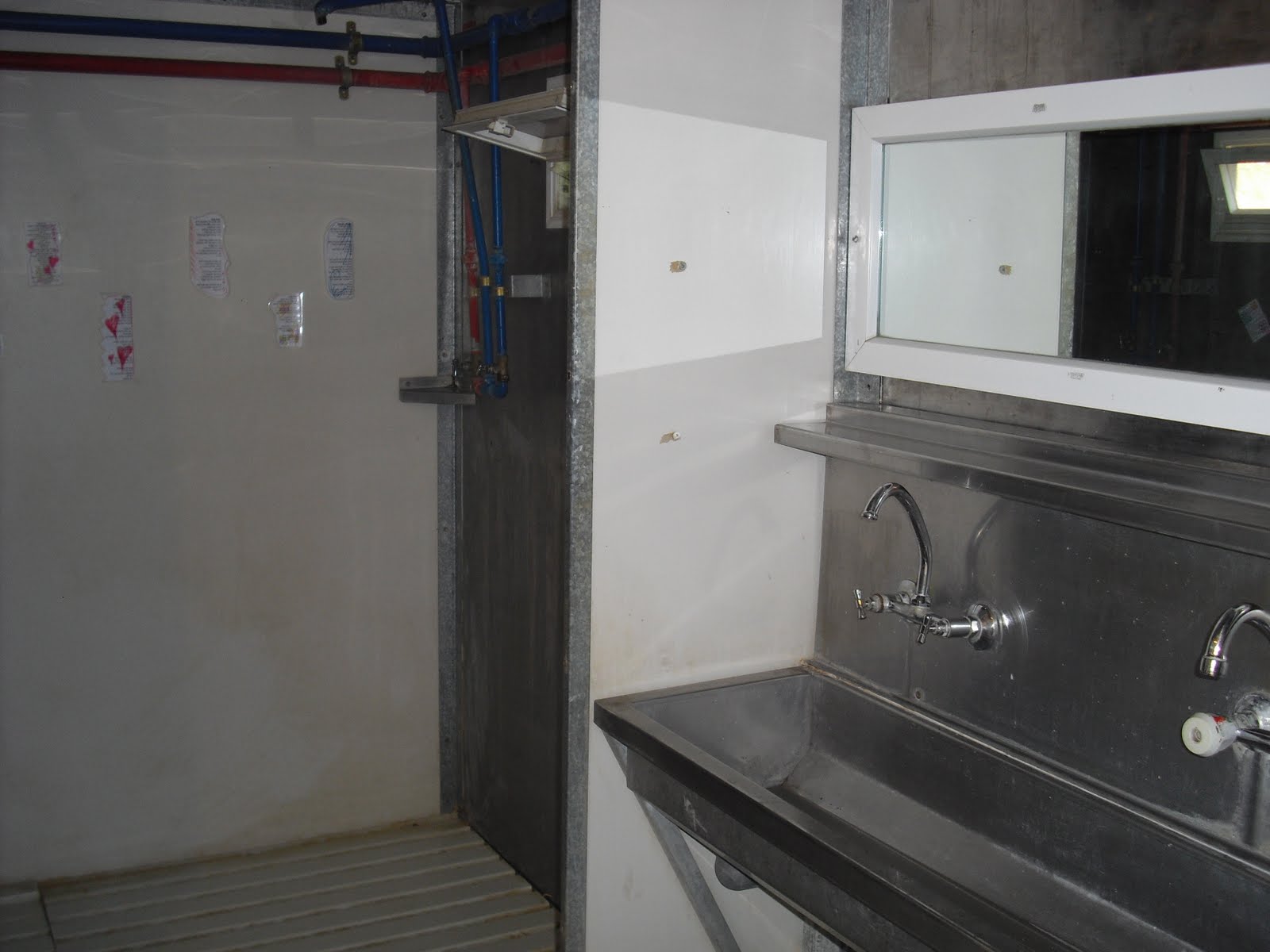
The difference between the previous and current base: the showers.
Next week I have 'imon svach' (training in bush-like terrain) and I will be closing next Shabbat, as well. The following week is shetach with battalion-wide exercises and then that weekend will be my last in Israel before I fly home for a month that Sunday. I am going to write another blog tomorrow about my upcoming one year anniversary of being in Israel (!!!!!!!!!!!!!!!) so stay tuned and carry on reading (and commenting) my blog in general, I really do hope it brings inspiration to people and some sort of insight to the aliyah experience and to the life of a lone soldier in a combat unit of the Israeli Defence Forces. Thanks for reading so far....
Saturday, 17 July 2010
The next step
Having left base last week, tomorrow is the day that I join up with the 'gdud' (battallion) and move to a new base. I am actually pretty nervous about tomorrow, like I was when I first joined the army because once again I will be a 'tzair' (young army status) and will be new to how things work, this time in the gdud.
The rest of my 'plooga' (company) have already been at the gdud for the last two weeks, helping to get the base ready for our time there. For me, however, I have been at ulpan (learning hebrew) on the tzanchanim training base for the last fortnight, something that every lone soldier or new immigrant is entitled to at the end of advanced training. It was an extremely fun and relaxed two weeks and being with all the other lone soldiers from tzanchanim, the majority being from USA, meant there was a lot of joking around. We learnt some hebrew obviously, but the two weeks were mainly appreciated because it meant we missed out on all the hard work that our friends have been doing at the gdud! Also, it meant another two hamshooshim (leaving for the weekend on a Thursday), which brings my tally of hamshooshim up to an incredible thirteen, when I tell my army friends about this fact, they normally look like they want to hit me, since a regular kravi soldier is said to get around two or three hamshooshim a year!!!

Showing off my red kumta on my base uniform
Joining the gdud, what does that mean exactly? The gdud, mine being 101, is made up of four 'ploogot' (companies), all of which have a different job and speciality. One of those four ploogot, is 'ploogat maslool', which is the company that has recently finished its training on the base and will stay together as a company for three months in the gdud. After three months, which marks the end of a soldiers' first year in the army, that company is broken up and the soldiers are divided amongst the three regular ploogot of the gdud. Now this all may sound a little confusing, as it was for me at the start, but I'm just trying to fully explain what the next step is.
So my company, which is basically the November 2009 draft of 101 battallion of tzanchanim, is now becoming the 'ploogat maslool' (in case you didn't know, there are three drafts a year for combat units; March, August and November). For the next three months, my plooga will stay together until around early October where we'll cease to be 'tzairim' (army younsters) and will become 'vatikim' (ancients (!) within the army). At the end of one year in the army, the length of our 'maslool' (route), we will also receive our tzanchanim fighter's pin, the last mantlepiece for our uniform. So when I go back to the army tomorrow, my plooga will be the youngest people in the gdud and, as tradition goes, we are going to suffer at the hands of all the vatikim, like March '08 draft. This is what is probably giving me all the nerves.
The base I'm moving to is, thankfully, only fifteen minutes from my kibbutz, Ortal, in the Golan Heights. After months of six hour journeys and lengthy explanations to why I was late, I can finally wake up in daylight on a Sunday morning and arrive back before lunch on a Friday afternoon! For the next three months, all of tzanchanim's battallions; 101, 202 and the idiotic 890, will be participating in the summer training here in the Golan Heights. I have finished all the training required to be considered a 'lohem' (fighter) but this training is on a battallion level. This means, there will be a lot of shetach and many exercises where the whole gdud practices working together.
 My class' room on the old training base.


The rest of my 'plooga' (company) have already been at the gdud for the last two weeks, helping to get the base ready for our time there. For me, however, I have been at ulpan (learning hebrew) on the tzanchanim training base for the last fortnight, something that every lone soldier or new immigrant is entitled to at the end of advanced training. It was an extremely fun and relaxed two weeks and being with all the other lone soldiers from tzanchanim, the majority being from USA, meant there was a lot of joking around. We learnt some hebrew obviously, but the two weeks were mainly appreciated because it meant we missed out on all the hard work that our friends have been doing at the gdud! Also, it meant another two hamshooshim (leaving for the weekend on a Thursday), which brings my tally of hamshooshim up to an incredible thirteen, when I tell my army friends about this fact, they normally look like they want to hit me, since a regular kravi soldier is said to get around two or three hamshooshim a year!!!

Showing off my red kumta on my base uniform
Joining the gdud, what does that mean exactly? The gdud, mine being 101, is made up of four 'ploogot' (companies), all of which have a different job and speciality. One of those four ploogot, is 'ploogat maslool', which is the company that has recently finished its training on the base and will stay together as a company for three months in the gdud. After three months, which marks the end of a soldiers' first year in the army, that company is broken up and the soldiers are divided amongst the three regular ploogot of the gdud. Now this all may sound a little confusing, as it was for me at the start, but I'm just trying to fully explain what the next step is.
So my company, which is basically the November 2009 draft of 101 battallion of tzanchanim, is now becoming the 'ploogat maslool' (in case you didn't know, there are three drafts a year for combat units; March, August and November). For the next three months, my plooga will stay together until around early October where we'll cease to be 'tzairim' (army younsters) and will become 'vatikim' (ancients (!) within the army). At the end of one year in the army, the length of our 'maslool' (route), we will also receive our tzanchanim fighter's pin, the last mantlepiece for our uniform. So when I go back to the army tomorrow, my plooga will be the youngest people in the gdud and, as tradition goes, we are going to suffer at the hands of all the vatikim, like March '08 draft. This is what is probably giving me all the nerves.
The base I'm moving to is, thankfully, only fifteen minutes from my kibbutz, Ortal, in the Golan Heights. After months of six hour journeys and lengthy explanations to why I was late, I can finally wake up in daylight on a Sunday morning and arrive back before lunch on a Friday afternoon! For the next three months, all of tzanchanim's battallions; 101, 202 and the idiotic 890, will be participating in the summer training here in the Golan Heights. I have finished all the training required to be considered a 'lohem' (fighter) but this training is on a battallion level. This means, there will be a lot of shetach and many exercises where the whole gdud practices working together.
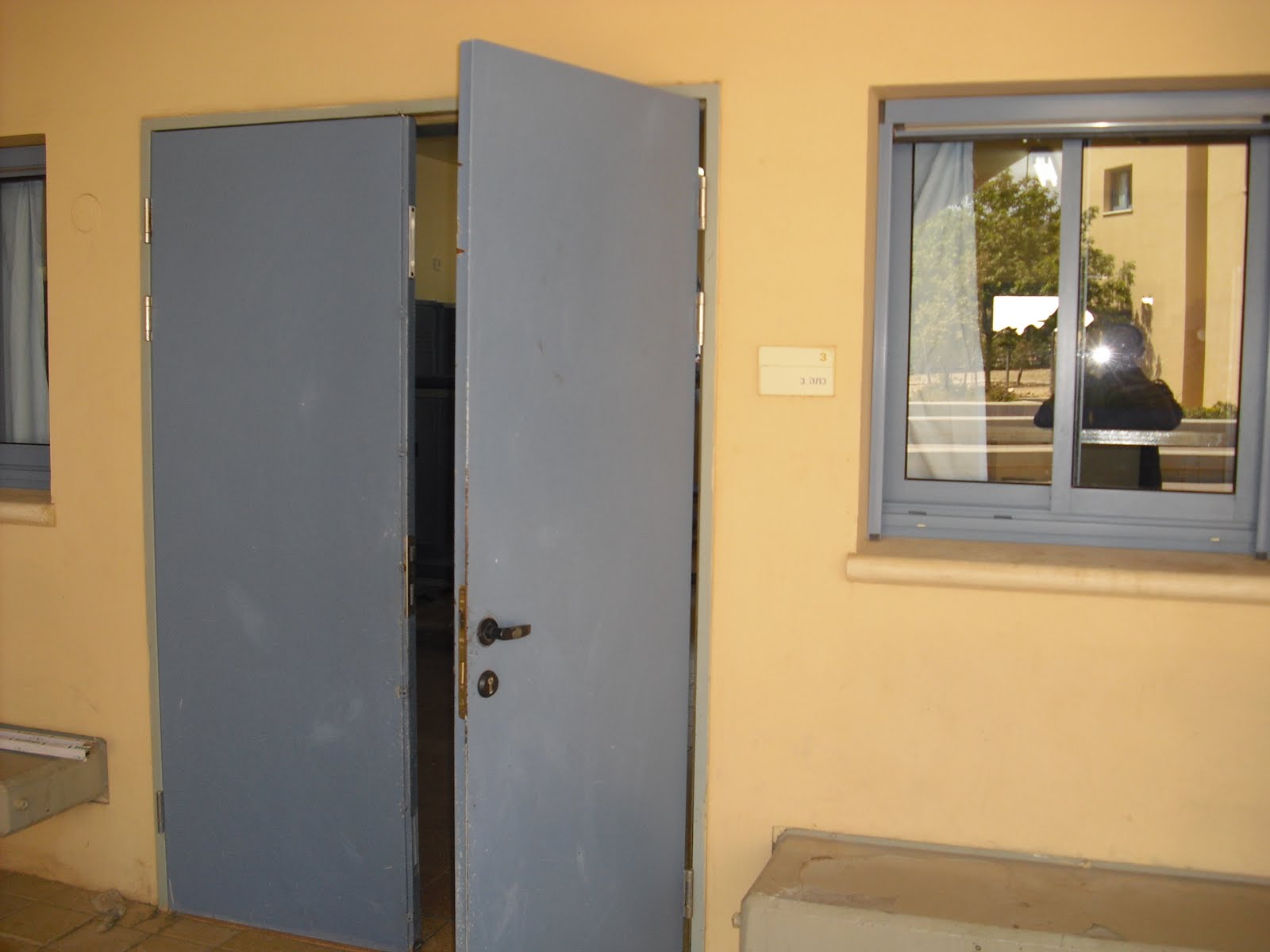 My class' room on the old training base.
The best news of all, however, is that last week, my lone soldier right of 30 days a year to fly back home to visit was approved by the gdud. In mid-August, I'm going back to London for a full month!!! You don't understand how excited I am; not only am I going to be there for my birthday, but also will be able to celebrate Rosh Hashannah with my family, see all my friends before they go back to university and go to see Spurs with my papa, hopefully in the Champions League! I haven't been home for a year now, not seen my friends in that time or seen my parents' new home. I can barely contain my excitement and will try to write a blog on the eve of going home in a months time.
I am not sure when I will be back in Ortal for a free weekend, in the gdud everything is, if possible, even more vague, but I'll be sure to write about what happens in the gdud at some point soon. Have a good week everyone!
The other newspaper articles I have been in...


Thursday, 15 July 2010
Leaving Base
For the last eight months I have been based at the Tzanchanim training base, but yesterday was my last day there and it was hard not to feel a little nostalgic. So, for this blog I wanted to sum up my time in the army so far, especially since I start a new part of my service from this Sunday.
On November 25th 2009, it all started. Although I had already officially been a soldier a month beforehand, this was my first day in the army and I remember arriving at the tzanchanim base and being in complete shock by the experience. When people go to a new school or a new place of work, there is always a feeling of nervousness and being clueless about how things work. But for me, starting school for the first time was nothing compared to that day, yes I was much older than when I started school, but imagine being in an army base for the first time, seeing people walking around with guns and suddenly being shouted at every minute in a language I wasn't comfortable with. Now, as I say goodbye to the base, I walk out of there as a king; with the red kumta on my shoulder, the wings on my chest and having conquered the shetach of the base in War Week.
1) Being cold - nothing can ever come close to that weekend I had in Hebron, where we were forced to do guard duty on a roof of a Palestinian home in the miserable rain and blistering cold. Eventually, it was so cold that we went inside and the six of us cuddled up on the cold, rock hard stairs.
2) Being hot - during War Week we ended up walking just 1 kilometre during an 'Omes Hom Hamesh' (the highest heat level where you're not allowed to do anything physical). We walked for half an hour in the middle of the day, in order to get to a certain point before the afternoon. I've never been so hot in my life and I remember my eyes stinging so much from the buckets of sweat dropping off my helmet-covered head.
3) Complete freedom/fear - the undescribable first five seconds after jumping out of an aeroplane. That's the time it takes for the canopy of the parachute to open, so for around 40m you free-fall! See http://samsank.blogspot.com/2010/06/first-out-of-plane.html.
4) Pain - being in 'matsav kriya' (the kneeled shooting position) for over an hour. Not even the satisfaction of breaking the base record could take away the unbearable pain in my ankle. See http://samsank.blogspot.com/2010/02/102.html.
5) Complete exhaustion/tiredness - the aftermath of the masa kumta was something I've never experienced before in my life. From the soles of my feet, where a layer of skin had come off, to chafing all across my stomach and back, to my extremely sore shoulders. Only a week and a half after the masa, did I feel fully back to normal strength.
That weekend in Hebron - chaos, rain and freezing temperatures but I still managed a smile!!!
These feelings are just some of the many that I've passed in my time in the army but I know that it's all just part of the game and that everyone around me went through it as well. So I've now left base, where apart from all the difficulties, I've had some exciting, fun and hilarious moments and I will keep some fond memories. This video was the video were shown on our last night of advanced training, it basically sums up everything we've done http://www.facebook.com/#!/video/video.php?v=1381372856927&ref=mf.
In the next blog, I will explain the next step...
On November 25th 2009, it all started. Although I had already officially been a soldier a month beforehand, this was my first day in the army and I remember arriving at the tzanchanim base and being in complete shock by the experience. When people go to a new school or a new place of work, there is always a feeling of nervousness and being clueless about how things work. But for me, starting school for the first time was nothing compared to that day, yes I was much older than when I started school, but imagine being in an army base for the first time, seeing people walking around with guns and suddenly being shouted at every minute in a language I wasn't comfortable with. Now, as I say goodbye to the base, I walk out of there as a king; with the red kumta on my shoulder, the wings on my chest and having conquered the shetach of the base in War Week.
 The Plooga - where I was living for the last eight months.
1) Being cold - nothing can ever come close to that weekend I had in Hebron, where we were forced to do guard duty on a roof of a Palestinian home in the miserable rain and blistering cold. Eventually, it was so cold that we went inside and the six of us cuddled up on the cold, rock hard stairs.
2) Being hot - during War Week we ended up walking just 1 kilometre during an 'Omes Hom Hamesh' (the highest heat level where you're not allowed to do anything physical). We walked for half an hour in the middle of the day, in order to get to a certain point before the afternoon. I've never been so hot in my life and I remember my eyes stinging so much from the buckets of sweat dropping off my helmet-covered head.
3) Complete freedom/fear - the undescribable first five seconds after jumping out of an aeroplane. That's the time it takes for the canopy of the parachute to open, so for around 40m you free-fall! See http://samsank.blogspot.com/2010/06/first-out-of-plane.html.
4) Pain - being in 'matsav kriya' (the kneeled shooting position) for over an hour. Not even the satisfaction of breaking the base record could take away the unbearable pain in my ankle. See http://samsank.blogspot.com/2010/02/102.html.
5) Complete exhaustion/tiredness - the aftermath of the masa kumta was something I've never experienced before in my life. From the soles of my feet, where a layer of skin had come off, to chafing all across my stomach and back, to my extremely sore shoulders. Only a week and a half after the masa, did I feel fully back to normal strength.
That weekend in Hebron - chaos, rain and freezing temperatures but I still managed a smile!!!
These feelings are just some of the many that I've passed in my time in the army but I know that it's all just part of the game and that everyone around me went through it as well. So I've now left base, where apart from all the difficulties, I've had some exciting, fun and hilarious moments and I will keep some fond memories. This video was the video were shown on our last night of advanced training, it basically sums up everything we've done http://www.facebook.com/#!/video/video.php?v=1381372856927&ref=mf.
In the next blog, I will explain the next step...
Subscribe to:
Posts (Atom)
